

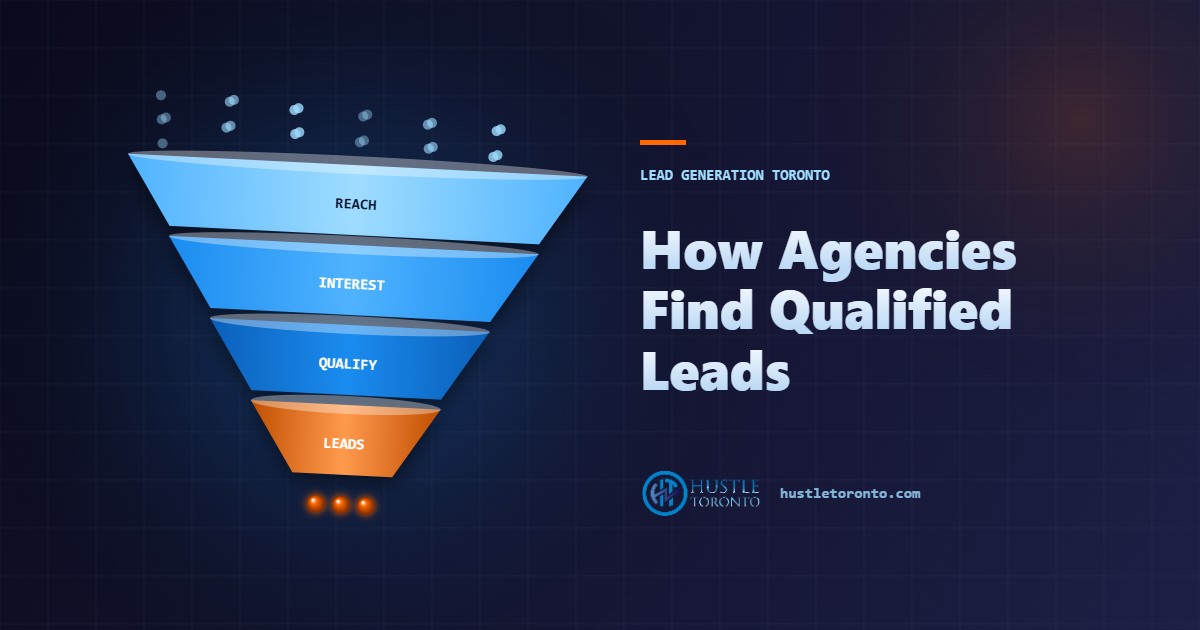
How does a lead generation agency generate qualified leads? A good lead generation agency defines exactly who your ideal customer is, reaches them through the channels where they look for solutions, such as Google search, paid ads, social media and content, sends them to landing pages built to convert, and then filters and tracks every enquiry so you only spend sales time on people likely to buy. The difference between a good and a poor agency is less about volume and more about lead quality.
This guide explains how lead generation works, what “qualified” really means, the channels agencies use, how pricing models differ and the questions to ask before hiring one in Toronto.
What is a qualified lead?
A lead is anyone who shows interest, such as filling in a form, calling or booking. A qualified lead also matches the criteria that make them a realistic customer. Common criteria include:
- Fit: the right industry, size, location or type of customer.
- Need: a real problem you solve.
- Budget: able to pay at your price point.
- Timing: planning to buy soon.
- Authority: the decision-maker, or able to involve them.
Agree on these criteria with any agency before you start. Without them, “more leads” can simply mean more time wasted.
How does the lead generation process work?
- Research: understand your best customers, competitors and what makes you the better choice.
- Offer: decide what people are invited to do, such as a quote, consultation, assessment or useful resource.
- Channels: choose where to reach buyers, based on how they search and buy.
- Landing pages: build focused pages for each offer and audience.
- Tracking: record every form, call and booking, and which campaign it came from.
- Qualification: use form questions, call scripts or automation to sort leads.
- Follow-up: respond quickly, ideally within minutes, and nurture leads not ready yet.
- Optimization: shift budget and effort to the sources producing customers, not just leads.
Which channels do lead generation agencies use?
| Channel | Speed | Lead intent | Notes |
|---|---|---|---|
| Google Search ads | Fast | High | Reaches people searching for your service now |
| Local SEO and Google Business Profile | Medium | High | Calls and direction requests from map results |
| Organic SEO and content | Slow | Medium to high | Lower cost per lead over time |
| Meta ads | Fast | Medium | Good for consumer and small business offers |
| LinkedIn ads | Medium | Medium | Precise B2B targeting at higher cost |
| Email and nurturing | Medium | Varies | Converts leads that are not ready yet |
| Outbound outreach | Medium | Varies | Must follow Canada’s anti-spam law |
If outreach includes email, it must comply with Canada’s Anti-Spam Legislation (CASL). The CRTC publishes a helpful CASL FAQ.
How do lead generation agencies charge?
| Model | How it works | Pros | Cons |
|---|---|---|---|
| Monthly retainer | Fixed fee for strategy and management, plus ad spend | Predictable; agency focuses on quality | You carry the ad spend risk |
| Pay per lead | A fee for each lead delivered | Easy to budget per lead | Can encourage volume over quality; leads may be shared |
| Performance or hybrid | Lower base plus bonus on results | Shared incentives | Needs clear, agreed tracking |
Ask exactly how a “lead” is defined before agreeing to pay per lead, and whether leads are exclusive to you.
What makes a landing page convert leads?
- A headline that matches the ad or search the visitor came from.
- A clear statement of who you help and what happens next.
- Real proof, such as reviews, client logos you are allowed to use or case studies.
- A short form, with only the questions you need to qualify.
- A visible phone number and, where useful, online booking.
- Fast loading on mobile.
Our article on the elements of a high-converting website goes deeper.
What questions should you ask a lead generation agency?
- How will you define a qualified lead for our business?
- Which channels would you use first, and why?
- Who owns the ad accounts, landing pages and lead data?
- How quickly are leads delivered to us, and in what format?
- How do you track which leads become customers?
- What happens if lead quality drops?
- What is the minimum commitment and notice period?
What warning signs should you watch for?
- Guaranteed lead numbers before they understand your business.
- Reports that only show clicks and impressions.
- Refusal to give you access to accounts or data.
- Leads that are shared with your competitors.
- Bought email lists or outreach that ignores CASL.
How does Hustle Toronto approach lead generation?
We combine search, social, ads and conversion-focused websites, and track leads through to customers so budget goes to what works. See our full list of services, our business development consultancy, or contact us to talk about your goals.
Frequently asked questions
What does a lead generation agency do?
It attracts potential customers through channels like search, ads, social and content, captures their details on landing pages, and filters and tracks them so your team can focus on likely buyers.
What is the difference between a lead and a qualified lead?
A lead is anyone who shows interest. A qualified lead also fits your criteria, such as need, budget, location, timing and decision-making authority.
Is pay-per-lead a good model?
It can be, but only with a clear, agreed definition of a lead and assurance that leads are exclusive to you. Otherwise quality often suffers.
How fast can a lead generation agency deliver leads?
Paid search and social campaigns can produce leads within days or weeks of launch. SEO-driven leads take longer, typically several months.
How quickly should I follow up on a new lead?
As fast as possible, ideally within minutes. Response speed has a big effect on whether a lead turns into a conversation.
Talk to a Toronto marketing team
Want more qualified leads, not just more leads? Book a free 30-minute strategy call, call +1 437 333 3496, or send us a message.